Valorant trade spacing: a 20-minute duo drill
Four short stages make trading a shared timing instead of a vague instruction.


Players are often told to “trade better” without being given a measurable action. Valorant trade spacing depends on three variables: the time between contacts, whether both players can see the same threat and whether one piece of utility can punish them together. This 20-minute duo drill isolates those variables before combining them in a live route.
Before you start
Choose one attacking route with a close corner, a medium-range duel and a turn that briefly breaks line of sight. Use the same weapons for the first three stages. Record the session or ask a teammate to observe from above. The goal is not a high kill count; it is a repeatable gap.
Set one verbal rule: the first player calls only “contact” and direction. The second player owns the trade. This prevents a long description from delaying the crosshair movement.
Minutes 0–5: mirror movement
Move through the route without opponents. The second player keeps the first at the edge of peripheral vision, stopping when the lead stops and accelerating when the lead commits. At each corner, freeze and check whether both players can see the likely defender without standing inside the same grenade or spray line.
Repeat at walk speed and full speed. If the gap changes dramatically, the follower is reacting to footsteps rather than reading the route. Swap roles after two runs.
Minutes 5–10: one fixed defender
Add a defender to one of three known positions. The lead player clears normally and may fire only a short burst. If the lead dies, the follower must begin the trade immediately without copying the exact path. Count successful trades within roughly one second.
Move the defender after every two attempts. The pair should learn which corners require a wider follower path and which demand a tighter gap. Note any angle that cannot be traded safely; it needs utility rather than closer spacing.
Minutes 10–15: utility constraint
Give the defender one slowing, damaging or vision-denial ability. The attackers receive one clearing ability. Their task is to keep the trade while avoiding a shared punishment. The lead can bait the utility, but the follower must preserve a line that becomes active as soon as the effect ends.
This stage explains why ideal distance is contextual. Against a shotgun, separate the bodies. Against a single-target precision weapon, shorten the trade time. Use the principles from our anti-eco spacing analysis when testing cheap weapons.
Minutes 15–20: live route and review
Add two roaming defenders and play the complete route five times. The attackers may stop, rotate or spend utility, but they must announce any change in lead player. After each run, answer three questions: Could the second player see first contact? Could one enemy action hit both? Did the pair protect the dropped rifle?
Finish with one adjustment for the next scrim. Do not try to fix every corner in a single session. Repeat the drill on another route only when the pair can hold its spacing at different speeds. Combine it with the Valorant role guide so role swaps include an explicit handover of first-contact responsibility.
Editorial note
Practice guide reviewed for current Valorant movement and weapon principles.
This article was reviewed on July 31, 2026.

Related stories
VALORANT Bind A execute guide for patch 13.02
A reliable Bind A execute creates two simultaneous problems instead of sending five players through A Short. Control either Showers or the Short cubbies, cut.
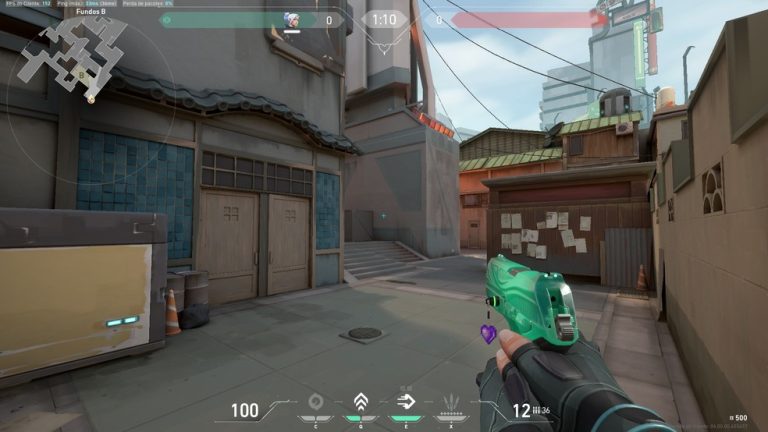
VALORANT Split B execute guide for patch 13.02
A Split B execute works when B Main and mid pressure arrive together. Patch 13.02 is the reference version. Clear close angles, deny Heaven vision and reserve.

VALORANT Lotus A execute guide for patch 13.02
A consistent Lotus A execute begins before the barrier drops. The attacking team needs a Rubble plan, utility for A Main and Tree, a plant location that.
Community channel
Join the discussion
Start a thoughtful, specific conversation about this story.
Verified readers only
Continue with Google to comment.
Your Google account creates a reader-only Kaizensclan profile. Your first comment is reviewed before publication.